Summary
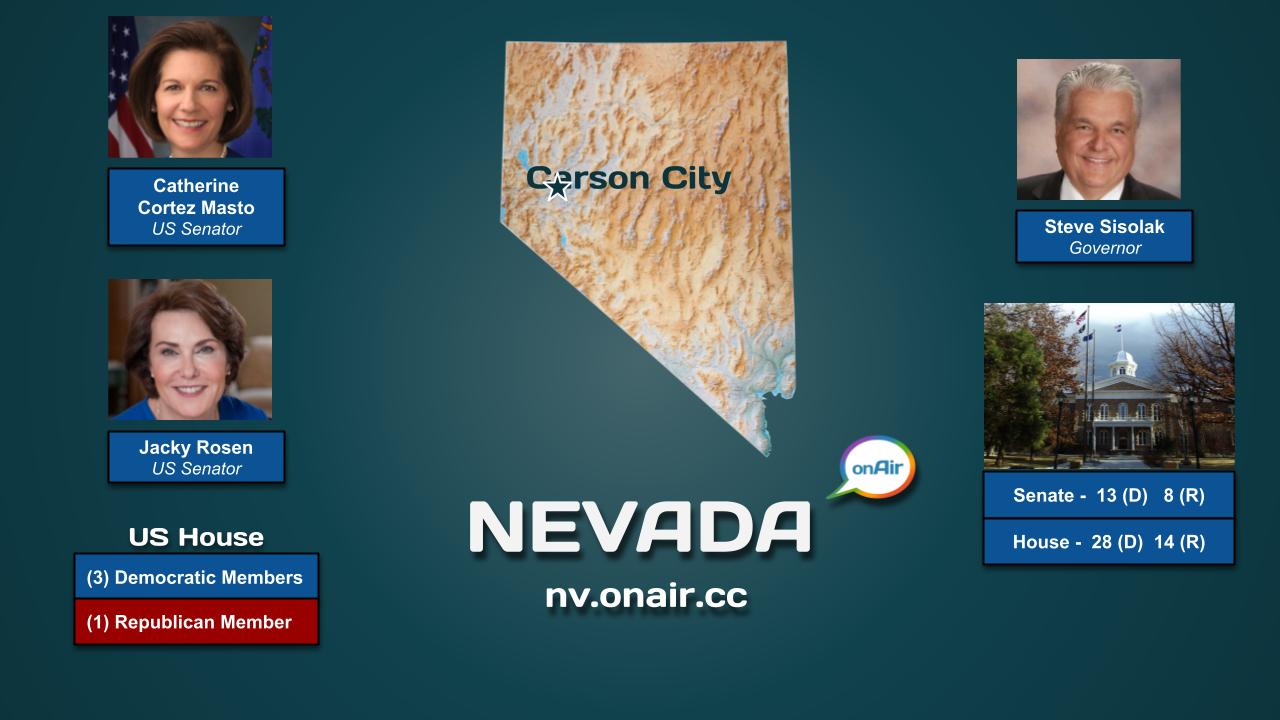
Nevada is located in the Western region of the USA with Carson City as its capital. Steve Sisolak (R) is Governor.
The Nevada legislature has 21 Senate members and 42 House members.
OnAir Post: Nevada onAir Hub
News
he base content in each post in this Nevada onAir Hub has been updated as of 12/20/23. In addition to the eight posts on the home page, in depth posts on each US House member and posts on Nevada government and elections have been started. These posts have been shared with the US onAir Hub and will updated in the US onAir automatically when they are updated in this hub.
If your university or nonpartisan organization (such as a government focused research center, citizen engagement program or a League of Women Voters chapter) is interested in assisting the US onAir network to help curate new issue posts or other posts on this Hub and moderate the forums in each post, contact Ben Murphy at Ben.Murphy@onair.cc.
We are also supporting college students to start an onAir chapter on the their campus to coordinate the curation and moderation of posts especially on state and local representatives and government.
About
This Nevada onAir Hub is managed by students supporting Nevadans to become more informed about and engaged in local, state, and federal politics while facilitating more civil and positive discussions with their representatives, candidates, and fellow citizens.
- Nevada onAir is one of 50 state governance and elections hubs that the US onAir Network is providing to help reinvigorate US democracy. This post has short summaries of current state and federal representatives with links to their complete Hub posts. Students curate post content from government, campaign, social media, and public websites. Key content on the Nevada Hub is also replicated on the US onAir nations Hub at: us.onair.cc.
- Nevada students will be forming onAir chapters in their colleges and universities to help curate Hub content. As more students participate and more onAir chapters are started, we will expand to include more state and local content as well as increase the number of aircasts – student-led, livestreamed, online discussions with candidates, representatives, and the public.
Find out more about Who Represents Me in Nevada
Learn more about the US onAir Network
All hub content in onAir hubs is free to the public. Hub ontent is under the Creative Commons Attribution-NonCommercial license which permits content sharing and adaptation by nonprofit organizations as long as proper attribution is given to its author(s) and is used for non-commercial purposes. Content and moderation guidelines reinforce our commitment to fact-based, comprehensive content and civil and honest discourse.
To participate in aircast and post discussions, email usdemocracy@onair.cc and include your first name last name, and zipcode. Your real name and any other profile information will not be displayed unless you choose to do so. Your personal information is not shared with any other website or organization.
Hub membership will enable you to:
- Participate in issue and interview aircasts (student-led livestreamed discussions);
- Interact directly with post authors and curators giving them feedback, content suggestions, and asking questions;
- Ask questions, make suggestions, and give endorsement to representatives
Democracy promoting Nonprofits
League of Women Voters of Southern Nevada -Empowering Voters and Defending Democracy.
The League of Women Voters of Southern Nevada is a political grassroots network and membership organization that believes the freedom to vote is a nonpartisan issue. For more than a century, we’ve worked to empower voters and defend democracy. As a women-led organization, we encourage everyone to take part in our democracy.
The League of Women Voters of Northern Nevada
Free news sources
Nevada Current is a nonprofit online source of political and policy news and commentary. We seek to:
Demonstrate how policies, institutions and systems make life harder for Nevadans than it needs to be;
Document how things got that way, and;
Explore what it might take to fix them.
The Current is part of States Newsroom, a national 501(c)(3) nonprofit supported by grants and a coalition of donors and readers. The Current retains editorial independence.
Vegas PBS
Vegas PBS is a member-supported public television service providing educational content for over 50 years. We build community through television, education services, and unique experiences that create a sense of place, civic and social capital. The station offers three unique secondary channels: Create, VEGAS PBS KIDS, and WORLD. In collaboration with community partners, we create award-winning content that examines informational, cultural, historic, and educational regional issues.
Web Links
State Representatives
Governor Steve Sisolak
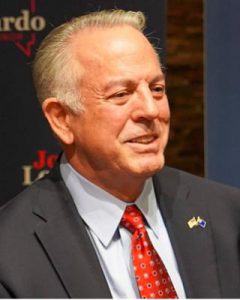 Current Position: Sheriff, Clark County
Affiliation: Republican
Candidate: 2023 Governor
Former Position: Army veteran
Joseph Michael Lombardo (born November 8, 1962) is an American law enforcement officer who is serving as the 17th sheriff of Clark County, the head of the Las Vegas Metropolitan Police Department (LVMPD), the combined law enforcement agency for Las Vegas and Clark County. Lombardo has held this office since 2015.[1][2][3][4] He is a member of the Republican Party.[5]
Lombardo is not running for re-election as Clark County Sheriff and is instead the Republican nominee for the 2022 Nevada gubernatorial election. Former Nevada Lieutenant Governor Mark Hutchison serves as campaign chairman for Lombardo’s gubernatorial campaign.
OnAir Post: Joe Lombardo – NV
US Representatives
Senator Catherine Cortez Masto
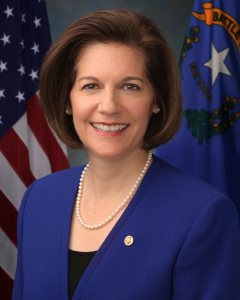 Current Position: US Senator since 2017
Affiliation: Democrat
Former Position: Nevada attorney general from 2006 – 2014
Masto worked four years as a civil attorney in Las Vegas and two years as a criminal prosecutor for the U.S. Attorney’s Office in Washington, D.C.
Masot became the first woman elected to represent Nevada in the Senate and the first Latina elected to serve in the upper chamber. In November 2003, Cortez Masto was named executive vice chancellor of the Nevada System of Higher Education.
Quotes:
Wildfires are devastating the West, and today I joined @ClimatePower and @ChiefDave_RFD
to call for action on climate. I’m leading legislation in Congress to combat wildfires back home, but it’s going to take all of us to address the climate crisis and protect our planet.
Nevada Sen. Catherine Cortez Masto’s full speech at the 2020 Democratic National Convention
OnAir Post: Catherine Cortez Masto – NV
Senator Jackie Rosen
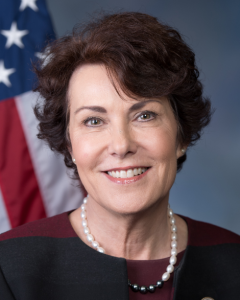 Current Position: US Senator since 2019
Affiliation: Democrat
Former Position: US Representative for NV-03 from 2017 – 2019
Rosen’s parents moved to Las Vegas, where Rosen moved after graduating. She took a job with Summa Corporation and worked summers as a waitress at Caesars Palace throughout the 1980s. While working for Summa, she attended Clark County Community College (now the College of Southern Nevada) and received an associate degree in computing and information technology in 1985. She began working for Southwest Gas from 1990 to 1993.
Quotes:
Nevada runs because of our state’s workers – union workers. And strong unions lead to safer workplaces, better pay and quality health care. It is time to pass the #PROAct! Jul 22, 2021·
OnAir Post: Jacky Rosen – NV
Dina Titus NV-01
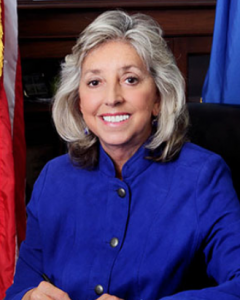 Current Position: US Representative of NV- 1st District since 2013
Affiliation: Democrat
Former Position: State Senator from 1993 – 2009
District: parts of communities in Clark County east of the Las Vegas Freeway and south of Nellis Air Force Base, including parts of Las Vegas, most of Henderson, Paradise, Sunrise Manor, and Winchester, as well as all of Boulder City, Nelson, and Whitney
Upcoming Election:
She served as the U.S. representative for Nevada’s 3rd congressional district from 2009 to 2011, when she was defeated by Joe Heck.
She served in the Nevada Senate and was its minority leader from 1993 to 2009. Before her election to Congress, Titus was a professor of political science at the University of Nevada, Las Vegas (UNLV), where she taught American and Nevada government for 30 years. She was the Democratic nominee for governor of Nevada in 2006.
Quotes:
As Chair of @TransportDems Subcommittee on Emergency Management it was a pleasure speaking with @FEMA
’s Youth Preparedness Council. These bright young people are doing great things to make their communities and our nation safer, more equitable, and more resilient to disasters.
Rep. Dina Titus: Biden’s $2T spending plan will ‘create jobs’
OnAir Post: Dina Titus NV-01
Mark Amodei NV-02
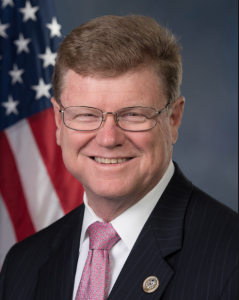 Current Position: US Representative of NV 2nd District since 2011
Affiliation: Republican
Former Positions: State Senator from 1999 – 2011; State Delegate from 1997 – 1999
District: northern third of the state. It includes most of Lyon County, all of Churchill, Douglas, Elko, Eureka, Humboldt, Lander, Pershing, Storey, and Washoe counties, as well as the state capital, Carson City.
Upcoming Election:
Amodei chaired the Nevada Republican Party from 2010 until 2011, when he stepped down to run in the September 13, 2011, special election to succeed Dean Heller .
Amodei entered U.S. Army JAG Corps after passing the bar. He became an Army JAG Corps officer prosecuting criminal matters, an Assistant U.S. Attorney and Assistant Post Judge Advocate. He served as a lawyer with Allison, MacKenzie from 1987 to 2004 and with Kummer from 2004 to 2007. He served as president of the Nevada Mining Association from 2007 to 2008.
Quotes:
I introduced the VACCINES Act that would ensure all veterans, regardless of their status within the VA health care system, would be considered eligible to receive testing and vaccination services in the event of a future national public health emergency.
Rep. Amodei: WH taking deep dive into gun issues
OnAir Post: Mark Amodei NV-02
Susie Lee NV-03
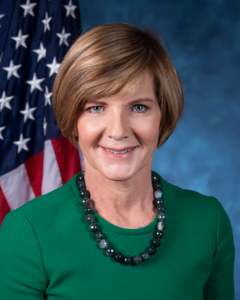 Current Position: US Representative of NV 3rd District since 2019
Affiliation: Democrat
District: area south of Las Vegas, including Henderson, Boulder City and much of unincorporated Clark County
Upcoming Election:
Lee became the founding director of the Inner-City Games, now known as the After-School All-Stars, which conducts after-school programs for children. Beginning in 2010, Lee served as the president of Communities In Schools of Nevada, a dropout prevention organization.
Quotes:
58% of Americans over 50 are concerned they will not be able to afford prescription drugs for themselves or their families. That is unacceptable. I’m proud to have introduced the Seniors SAVE on Prescription Drugs Act to help our seniors afford the medications they need.
Candidate Conversations: Susie Lee
OnAir Post: Susie Lee NV-03
Steven Horsford NV-04
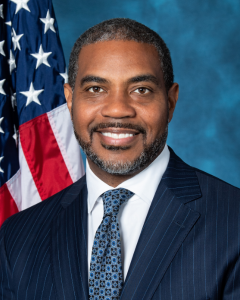 Current Position: US Representative of NV 4th District since 2019
Affiliation: Democrat
Former Position: State Senator from 2005 – 2013
District: central portion of the state, it includes most of northern Clark County, southern Lyon County, most of Lincoln County, a sliver of Churchill County and all of Esmeralda, Mineral, and Nye counties.
Upcoming Election:
Horsford was the first African American to serve as Majority Leader (2009–2013) and the first African American to represent Nevada in Congress.. Horsford was the first African American to serve as Majority Leader (2009–2013) and the first African American to represent Nevada in Congress.
Horsford was CEO of the Culinary Training Academy, a job training program. He also served on the Southern Nevada Workforce Investment Board. In 1996, he began working at R&R Partners in Las Vegas.
Quotes:
When I was 19, my father was killed. I know the pain and trauma that gun violence brings and I’m determined to keep Nevada families safe. Recently, I spoke w/@8NewsNow about my bill to #BreaktheCycle of violence & build new opportunities for youth.
OnAir Post: Steven Horsford NV-04
More Information
Wikipedia
Constitution and laws
Drafted by a convention of delegates, Constitution of Nevada is the supreme state law became effective on October 31, 1864 when the Nevada Territory achieved statehood.. Based on the 1848 Constitution of California, the majority of the Constitution’s framers not only were from California but had served in government there.[1]
The current codified laws of Nevada are the Nevada Revised Statues, which include the legislation passed by the Legislature and signed by the governor. Executive agency regulations adopted by the governor are codified as the Nevada Administrative Code.[2]
Nevada Revised Statutes
Nevada Revised Statutes are the annotated codification of Nevada’s laws, the United States and Nevada constitutions, certain court rules, various special and local acts, and other materials deemed appropriate by the legislative counsel of the Legislative Counsel Bureau.[3]
Organized by subject matter, the laws are divided first into titles, each embracing a single topic, then into chapters covering specific subjects within that topic, and finally into individual sections, each immediately followed by its legislative history. The legislative history is denoted by numbers in brackets and parentheses corresponding to the page and year in the Statutes of Nevada where the section was originally derived or amended.[3]
The NRS also contains comparative tables, a comprehensive index, and various annotations appearing after each provision, which may include reviser’s notes explaining substantive provisions, cross-references to related statutes, administrative or constitutional provisions, and summaries of relevant court decisions, attorney general’s opinions, or opinions of the Nevada Commission on Ethics.[3]
Statutes of Nevada
The Statutes of Nevada, sometimes called the session laws, are a bound compilation of all general and special laws and resolutions enacted by the Legislature in a specific legislative year, published for every session since territorial days. Thoroughly indexed and normally available within a few months of the close of a session, they are preceded by a temporary softbound compilation known as the advance sheets, which contains the same laws and resolutions in the same order and includes an index and locator tables.[4]
Bills and resolutions appear in the Statutes of Nevada in the same form as the enrolled copies filed with the secretary of state, with new material printed in bolded italics and deleted material enclosed in brackets with strikethrough. Laws are arranged by chapter number assigned by the secretary of state in the order received from the governor.[4]
In addition to the complete text of all laws and resolutions, the Statutes of Nevada contain indexed copies of the United States and Nevada constitutions, along with an index and several tables identifying amended, repealed, or newly added sections and chapters of the Nevada Revised Statutes, as well as selected special and local acts. The reprint of the NRS incorporates the statutory changes adopted during the previous session.[4]
Nevada Administrative Code
The Nevada Administrative Code (NAC) is the codified body of permanent regulations adopted by executive branch agencies. This process is governed by the Nevada Administrative Procedure Act, contained in Nevada Revised Statutes Chapter 233B. Under that law, certain bodies are exempt from these rule-making provisions and may write their own regulations, such as the governor, the Department of Corrections, and the Gaming Control Board., among others.[5]
Rulemaking may begin when the legislature mandates it, when an agency acts within its statutory authority, or when a member of the public petitions for it. Of the three types of regulation—permanent, temporary, and emergency—only permanent regulations become part of the NAC; temporary regulations expire by limitation, and emergency regulations last no more than 120 days.[5]
The Nevada Register of Administrative Regulations, similar to the United States Federal Register, is published monthly by the Legislative Council Bureau, a body within the Legislature that acts on its behalf in between sessions, and is available online. Permanent regulations are added to the NAC upon approval by bureau.[5]
Temporary and emergency regulations do not become part of the NAC, though both appear in the Register. For a temporary regulation to become permanent, the agency must anticipate the expiration date and submit a permanent regulation under the normal procedures. Emergency regulations must be endorsed by the governor and a regulation may be adopted by the emergency procedure only once. Regulations of agencies exempt from Chapter 233B are not included in the NAC unless the bureau authorizes their inclusion.[5]
Legislative

The Nevada Legislature is the bicameral state legislature of the U.S. state of Nevada. Formed by the state’s constitution of 1864, the Legislature consists of the Nevada Assembly, its lower house with 42 members and the Nevada Senate, its upper house with 21 members. The Constitution does not set a minimum size of the Legislature, but it does set a maximum of 75 legislators with the Senate not less than a third nor larger than a half of the size of the Assembly.[6]
Regular sessions of the Legislature are biennial (once every two years), begin on the first Monday in February in odd-numbered years, and may not exceed 120 days. Originally, the Constitution limited the sessions to 60 days. In 1958, the 60 day-limit was removed by constitutional amendment. A trend towards longer and more expensive sessions was the primary motivator of the consitiutional amendment limiting sessions to 120 days.[7]
Special sessions can be called by the governor and, since 2013, by the Legislature itself if two-thirds of lawmakers agree.[8] Legislative work continues between sessions in standing committees and the Nevada Legislative Counsel Bureau.[7]
In 2019, Nevada became the first U.S. state with a female-majority legislature.[9] As of most recent 83rd (2025) legislative session, women retain 62% of the seats overall and within each chamber, the highest in the nation.[10][11][12]
As of 2025, members of the Democratic Party have a majority in both chambers since 2009.[13][14]
With a total of 63 seats, it is the nation’s third-smallest state legislature after Alaska (60) and Delaware (62).[15]
Legislative Building
The Legislature, Nevada Supreme Court, and governor originally shared the Nevada State Capitol in Carson City, which was built between 1870 and 1871. Constructed from local sandstone with a silver-colored cupola dome 120 feet tall and cost less than $100,000 in 1870 (equivalent to $2,546,053 in 2025). Just after 1900, an octagonal annex was added to the Capitol building in order to house the Nevada State Library. Later, the Capitol doubled in size when wings were added to the north and south ends of the building. However, signs of aging became apparent by 1950 when the Legislature developed a plan to demolish the building and rebuild it from the ground up. In 1959, the Legislature changed plans and decided instead to undergo a complete restoration of the building, the funding for which was passed in 1977. During its restoration, the entire building was gutted and retrofitted for modern building codes and earthquake resistance and installed a new Alaskan marble foyer. The original dome was replaced with a fiberglass construction replica.[16]
In 1931, the Supreme Court moved into its own building, as did the Legislature in 1971 when it moved to the Nevada State Legislative Building, which made Nevada one of three states whose legislature does not meet in its Capitol building (the other two being Alabama and North Carolina). Presently, the Capitol building houses five of Nevada’s six elected executive constitutional officers, governor, secretary of state, treasurer, lieutenant governor, and controller. The attorney general’s office is in another building.[16]
Executive
Nevada’s executive branch is a plural executive in six independently elected constitutional officers, including governor, lieutenant governor, secretary of state, attorney general, treasurer carry out the duties of the executive. Despite this shared power, the chief executive is considered to be the governor, who is also the head of state and supervises a majority of state agencies.[12] However, the governor has no authority over the other executive officers, nor can the governor remove any of them from office.[17][2]
- Executive officers of Nevada as of June 2026


.jpg)


.jpg)

Executive officers in Nevada may be removed from office upon a successful recall election by voters or by impeachment by the Legislature. Nevada’s impeachment process is similar to the federal process. The Assembly requires a simple majority to pass articles of impeachment, after which the Senate conducts the trial and may vote to convict and remove from office. The difference between the federal and Nevada’s process is that the two-thirds majority required for conviction and removal in the Senate must be a two-thirds of all members in the body, not merely two-thirds of those present and voting.[18]
The original 1864 constitution created eight total statewide executives and included the surveyor general and the superintendent of public instruction. Voters approved constitutional amendments in 1954 and 1956 which made them positions appointed by the governor.[17]
Unlike with the federal government, Nevada executives, including the governor, do not need to seek the advice and consent of the Legislature in order to appoint the heads of state executive agencies, largely due to the fact that the legislature meets biennially and to approve each appointment would be impractical.[19] As a safeguard granting each of Nevada’s six executives such broad powers of appointment, Section 1 of Nevada’s Constitution grants the Legislature the right to review and approve executive regulations before they become effective and the power to nullify regulations with a simple majority. If the Legislature is out of session, the Legislative Counsel Bureau can act on its behalf as in most other scenarios.[20]


Governor
The governor of Nevada serves as the head of Nevada’s plural executive and has a duty to ensure the faithful execution of state law. A large responsibility of the governor is to appoint, as of 2024, the top position (and deputies) of 80 state agencies and departments. In addition, the governor appoints the members of around 200 boards, commissions, and committees created by law, several of which the governor is statutorily a member.[21]
According to professors at the University of Nevada, Reno, the governor wields the most power in appointment of the Board of Pardons Commissioners, as the governor is the only member of the board with an absolute veto authority, as well as the Transportation Board of Directors as well as the Board of Examiners.[22]
The governor serves a four-year term. Candidates must be at least twenty-five years of age and must have been Nevada residents for at least two years before election.[23]
Similar to the federal system, Nevada’s governor can be impeached by the legislature’s lower house, the Assembly with a simple majority for the articles of impeachment. The upper house, the Senate, would conduct the trial. A two-thirds majority vote is required to convict the governor and remove him from office. Unlike the federal system, both the Assembly’s vote to impeach and the Senate’s conviction and removal in Nevada are counted against the elected number of members in that body, not merely those present for the vote. As of 2025, it would require 22 votes to impeach the governor in the Assembly and at least 14 votes in the Senate.[18]
As of June 2026, the current governor is Joe Lombardo, a Republican.
Attorney general
The attorney general serves as Nevada’s chief law enforcement officer, overseeing a statewide team of over 300 staff members who provide legal counsel and representation for all state agencies, including boards and commissions. The attorney general is responsible for criminal jurisdiction over consumer, Medicaid, mortgage, and insurance fraud, public integrity crimes committed by government employees, and human trafficking offenses, among others, with the goal of protecting vulnerable populations.[24]
In addition to prosecutors, the attorney general’s office operates a criminal investigations division staffed by nearly fifty sworn peace officers authorized to investigate these offenses. The attorney general’s wide-ranging duties also include participation on multiple State boards and committees, such as the Board of Examiners, Board of Prison Commissioners, Board of Pardons Commissioners, Executive Branch Audit Committee, Advisory Committee on the Administration of Justice, Domestic Violence Prevention Council, Substance Abuse Working Group, Prosecution Advisory Council, and Technological Crime Advisory Board.[24]
As of June 2026, the current attorney general is Aaron Ford, a Democrat.
Treasurer and controller
Although the Nevada state treasurer and controller are mandated by the Nevada Constitution, the constitution does not specify any of the duties for either office. Instead, the duties and responsibilities of the officers elected to hold each position are prescribed by Nevada Revised Statutes. In effect, the treasurer and controller are two halves of the state’s financial system.[25][7]
Because of the similarities and overlap of each office, there have been attempts to combine the offices, including in 1995 and 1999, which were unsuccessful.[26]
The only state-wide elected officer to be successfully impeached in Nevada was Republican Controller Kathy Augustine in 2004. A special session of the state legislature was called during which the state assembly voted unanimously to impeach her on three articles accusing her of improper use of state employee and state resources regarding her 2002 election campaign. The state senate voted unanimously to convict her of one of the charges, but did not remove her from office and she finished her term as controller.[27]
As of June 2026, the current treasuerer is Zach Conine, a Democrat, while the controller is Andy Mathews, a Republican.
Treasurer duties
The treasurer serves as of the state’s money, and serves as the official cashier and receives money owed to the state and expends money the state owes to other entities or individuals. However, the treasurer may only expend state money upon the receipt of a financial warrant issued by the controller.[25]
Controller duties
In addition to issuing financial warrants to the treasurer for payments made by the state, the controller also serves as the state’s bookkeeper and functions as the chief auditor when there is a claim made against the state.[25]
State executive agencies
Major state agencies include:[28]
- Nevada Gaming Control Board
- Consumer Health Assistance
- Nevada Department of Cultural Affairs
- Governor’s Office of Economic Development
- Nevada Film Office
- Department of Employment, Training & Rehabilitation
- Department of Health and Human Services
- Division of Minerals, Commission on Mineral Resources
- Department of Personnel
- Advisory Council for Prosecuting Attorneys
- Public Employees Benefit Program
- Public Employees Retirement System
- Public Utilities Commission
- Department of Taxation
- Commission on Tourism
- Universities and Community Colleges of Nevada
- Western Interstate Commission for Higher Education
Judiciary
The Supreme Court of Nevada is the state supreme court. Original jurisdiction is divided between the District Courts (with general jurisdiction), and Justice Courts and municipal courts (both of limited jurisdiction).
Local government

Incorporated towns in Nevada, known as cities, are given the authority to legislate anything not prohibited by law. A recent movement has begun to permit home rule in incorporated Nevada cities to give them more flexibility and fewer restrictions from the legislature.
Unincorporated towns are settlements eminently governed by the county in which they are located, but who, by local referendum or by the act of the county commission, can form limited local governments in the form of a Town Advisory Board (TAB)/Citizens Advisory Council (CAC), or a Town Board.
Town Advisory Boards and Citizens Advisory Councils are formed purely by act of the county commission. Consisting of three to five members, these elected boards form a purely advisory role, and in no way diminish the responsibilities of the county commission that creates them. Members of advisory councils and boards are elected to two-year terms, and serve without compensation. The councils and boards, themselves, are provided no revenue, and oversee no budget.
Town Boards are limited local governments created by either the local county commission, or by referendum. The board consists of five members elected to four-year terms. Half the board is required to be up for election in each election. The board elects from within its ranks a town chairperson and town clerk. While more powerful than Town Advisory Boards and Citizens Advisory Councils, they also serve a largely advisory role, with their funding provided by their local county commission. The local county commission has the power to put before residents of the town a vote on whether to keep or dissolve a town board at any general election. Town boards have the ability to appoint a town manager if they choose to do so.
See also
Notes
- ↑ Wasserman, Scott G. (August 2018). “The Origin of the Nevada Rule of Law” (PDF). Nevada Lawyer. 26 (8): 32–33. Archived (PDF) from the original on July 28, 2022.
- 1 2 Cegavske 2018.
- 1 2 3 Legislative Manual 2025, pp. 231–232.
- 1 2 3 Legislative Manual 2025, pp. 232–233.
- 1 2 3 4 McDonald, Jerred (September 1, 2013). The Nevada Administrative Code: A Brief Explanation and Frequently Asked Questions (PDF) (Report). Nevada Legislative Counsel Bureau. Archived from the original (PDF) on September 27, 2015.
- ↑ Legislative Manual 2025, pp. 127.
- 1 2 3 Bowers & Damore, p. 95.
- ↑ Bowers & Damore, p. 98.
- ↑ “Nevada Makes History With First Female-Majority Legislature”. BBC. December 19, 2018. Archived from the original on December 19, 2018.
- ↑ Ross, McKenna (May 11, 2025). “‘You can be a leader and a mother’: Nevada lawmakers balance role, motherhood”. Las Vegas Review-Journal. Archived from the original on May 12, 2025.
- ↑ Women in the Nevada Legislature (PDF) (Report). Nevada Legislative Counsel Bureau, Nevada Legislature. April 2025.
- 1 2 Bowers & Damore, p. 109–110.
- ↑ Bowers & Damore, p. 103.
- ↑ Davis, Samuel Post (1913). The History of Nevada (1st ed.). Reno: Elms Publishing. p. 196. OCLC 7990365.
- ↑ “Legislative Partisan Splits”. Stateside Associates. Archived from the original on July 3, 2026. Retrieved July 3, 2026.
- 1 2 Cegavske 2018, p. 73.
- 1 2 Bowers & Damore, p. 109.
- 1 2 Bowers & Damore, p. 111.
- ↑ `Bowers & Damore, p. 115.
- ↑ Bowers & Damore, p. 116.
- ↑ Bowers & Damore, p. 115.
- ↑ Bowers & Damore, p. 119.
- ↑ NRS § 223.010
- 1 2 Cegavske 2018, p. 26.
- 1 2 3 Bowers 2012, p. 94.
- ↑ Bowers 2012, p. 95.
- ↑ Bowers 2012, p. 84.
- ↑ Research Division (May 2026). “Nevada State Government” (PDF). Nevada Legislative Counsel Bureau. Nevada Legislature. Archived from the original (PDF) on July 15, 2026.
References
- Bowers, Michael W.; Damore, David F. (2025). The Sagebrush State: Nevada’s History, Government, and Politics (URL is 4th edition). Wilbur S. Shepperson series in Nevada history (7th ed.). Reno: University of Nevada Press. ISBN 9781647791506.
- Cegavske, Barbara K., ed. (2018). Political History of Nevada (PDF) (12th ed.). Carson City: Secretary of State of Nevada and the Nevada Legislative Counsel Bureau. Archived (PDF) from the original on May 31, 2025.
- Legislative Manual: State of Nevada Eighty-Third Session of the Nevada Legislature (Report). Carson City: Nevada Legislative Counsel Bureau. March 31, 2025. p. 127. Bulletin 25-1.